
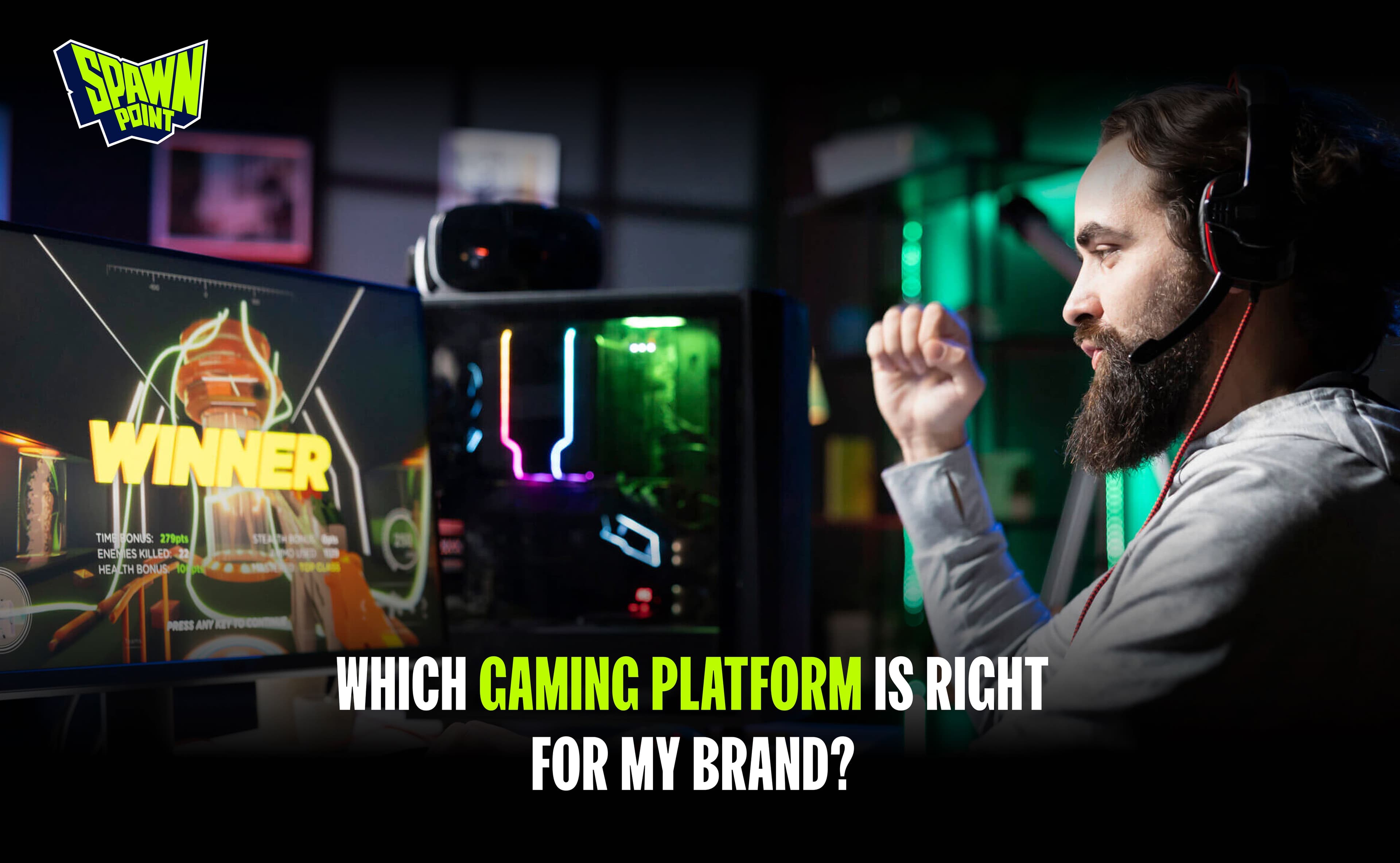
Which Gaming Platform Is Right for My Brand? Guide for Brands

Blog
Written By
Tehreem Fazal Qureshi
Tue Feb 17 2026
Blog
Blog

Choosing a game platform can become one of the most important marketing decisions, as game worlds become one of the most ubiquitous and powerful digital platforms in the world. Within seconds of entering a virtual world, consumers determine whether a brand belongs there or not. That is why game platform selection should be focused not on trends, but rather on brand goals, audience habits and experience design to meet the needs of both brands and consumers. The platform determines the success of in-game advertising campaigns.

Games have become massive social spaces, places for player creativity, and drivers of culture. Whether it's on a large scale with branded spaces in a 3D world, or on the go with a mobile experience, knowing which gaming platform is right for my brand comes down to what I want to achieve and how players engage.


Understanding Gaming Platforms in Brand Marketing

In this digital ecosystem, users play, interact, socialize and create, and for the brands, it is not an advertising space, but a living space. In-game advertising is most effective when the brands represented are native to the world and improve the game experience. Some of your platforms can also specialize in creative or format constraints, user-generated content, competition, storytelling or a community. Ultimately, the right platform is the one your audience is already on, and can be used to get your message across where it fits the best.

Matching Brand Objectives to the Right Platform

Brands must consider their objectives: scale and reach are the best fit for awareness, while immersion best suits engagement. Consumers exhibit more positive attitudes to branded experiences located within engaging worlds, rather than non-interactive placements, when considering long-term brand affinity (a consumer's tendency to favor a brand). For brands asking, which gaming platform is right for my brand? think about matching intent with environment. A narrative-driven luxury brand could look to tap into the storytelling element of games, while a youth-focused brand could consider the creativity and connectedness of the social gaming environment. In-game marketing should complement the player experience, never disrupt it.

Virtual Worlds and Immersive Brand Experiences

Virtual worlds are about being an experience, rather than being a message. With exploration, interaction, and self-expression at their core, virtual worlds enable brand campaigns and activations. Platforms such as Roblox may ease the creation of users' customizable branded spaces for engagement. Roblox game marketing is particularly popular with brands targeting Generation Z, as brands can create playable environments, challenges, and events that users can choose to participate in instead of advertisements. This shifts the focus from brand impressions to user interactions, brand recall, and brand sentiment.

In-Game Marketing Across Different Platform Types

These forms of in-game advertising can vary widely, but due to the scale and accessibility of mobile games, they can be preferable to use for awareness and performance marketing campaigns, whereas console and PC platforms are typically higher fidelity and story-driven. Community platforms such as Discord allow for active engagement, overcoming the limitations of single campaigns and allowing brands to create more permanent relationships. A strong gaming platform strategy involves a number of touchpoints to create a cohesive brand experience.

Choosing the Best Gaming Platform for Your Brand

Brands optimize for gaming platforms based on demographics, content type, and budget. Platforms that scale with performance allow brands to start small initially, expanding over time as performance improves. This is why gaming is attractive to both global brands and smaller, emerging, or non-endemic brands. On top of that, brands should consider longevity, as activations with experiences that audiences can come back to have proven to be more successful than ones that are one-offs. When thinking of which gaming platform makes sense for my brand, I think less about visibility.

The Role of Strategy in Platform Selection

Without a calculated plan, platform selection can backfire, resulting in misalignment with marketing objectives. A solid in-game marketing strategy sets tone, engagement level, and success metrics pre-launch. This ensures that the platform supports the brand story rather than forcing it. Winning brands think of these platforms as communities, not as media buys. They understand the culture, behavior, and expectations of players. They understand what it takes to turn a gaming channel into a brand channel.

The Future of Brand Marketing on Gaming Platforms

As video game platforms interlace interactions with social media, commerce, and content creator economies, in-game brand integration will become increasingly advanced, with continued focus on personalization and data-driven in-game marketing. For forward-thinking brands, answering which gaming platform is right for my brand today defines how they will grow in the future. First movers that invest in experience-led strategies will enjoy greater relevance and loyalty from consumers.

Frequently Asked Questions

1. Which gaming platform is right for me?

The right gaming platform depends on your audience, objectives, and the type of engagement you want to create.

2. Which gaming platform is best?

There is no single best platform; the best gaming platform for your brand is the one that aligns with your strategy and audience behavior.

3. Which brand is best for gaming?

Brands that focus on creativity, community, and experience-driven marketing perform best in gaming environments.

4. What is the top 1 gaming brand?

There is no universal top gaming brand, as success varies by platform, audience, and region.

5. Which is the best platform for gaming?

The best platform for gaming depends on user preferences, including mobile, console, PC, or virtual world platforms.

6. What is the big 3 of gaming?

The big three gaming segments are mobile gaming, console gaming, and PC gaming.

7. What is your preferred gaming platform?

Preferred platforms vary widely, but social and immersive platforms are growing fastest among younger audiences.
Tehreem

Tehreem Fazal Qureshi

Tehreem Fazal is a creative strategist, content marketer, and freelance writer with over six years of experience crafting impactful stories for local and international brands. She specializes in content strategy, brand storytelling, and SEO-driven writing across industries like fashion, real estate, food, digital marketing, lifestyle, and automotive etc. Her words have shaped the voice of leading names including Master Group, LUMS, Metropolitan Properties UAE, and more. With a background in English Literature, Tehreem blends creativity with strategy to make every piece of content resonate and convert. When she’s not writing, she’s exploring new ideas, brands, and narratives that inspire.

LET'S COLLAB

Book a call with spawnpoint

Curious how we handle your data with care? Scoop into our Privacy Policy.

COLLAB@SPAWNPOINT.COM

Spawn Point
NEWSLETTER
Spawn Point
NEWSLETTER
Spawn Point
NEWSLETTER
Spawn Point
NEWSLETTER
Spawn Point
NEWSLETTER
Spawn Point
NEWSLETTER
Spawn Point
NEWSLETTER
Spawn Point
NEWSLETTER
SP
NEWSLETTER
SP
NEWSLETTER
SP
NEWSLETTER
SP
NEWSLETTER
SP
NEWSLETTER
SP
NEWSLETTER
SP
NEWSLETTER
SP
NEWSLETTER
Game Characters